
Every September, National Healthy Aging Month offers a timely reminder that the habits shaping how we age are largely within our control. Healthy aging tips are something everyone should consider.
First established in 1992, the observance has grown into a nationally recognized opportunity for older adults and their families to reflect on wellness, routine, and what it means to live well in later life.
The 2026 theme, “Curiosity Has No Age Limit,” reframes aging not as a season of limitation but as one of continued learning, exploration, and engagement.
For older adults in Austin, TX, that message lands in a city unusually well suited to it.
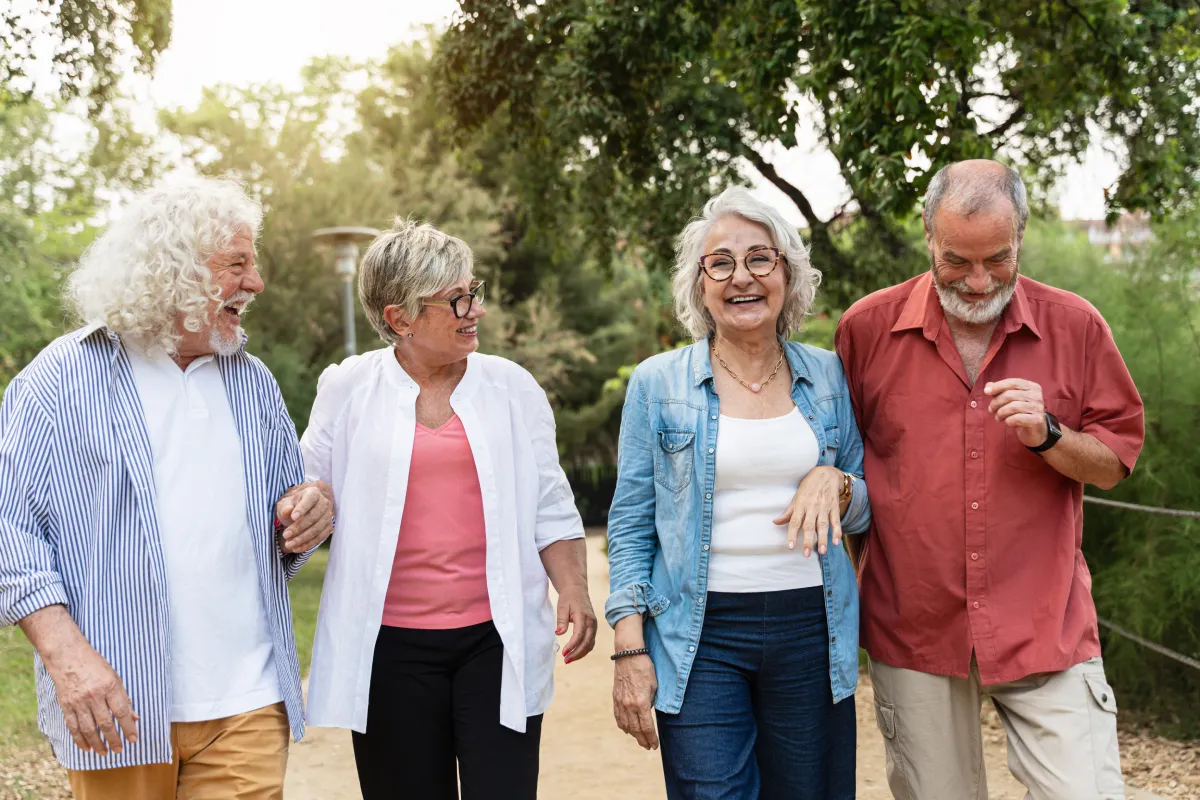
Why staying active as you age matters more than most people realize
The research on physical activity and aging is more compelling than most older adults are told.
Just 22 minutes of daily moderate-intensity movement can significantly reduce mortality risk and support longevity, with the life-extending benefits of exercise increasing most sharply after age 60, precisely when many people become less active.
The reasons to stay active as you age extend well beyond general fitness.
The Centers for Disease Control and Prevention (CDC) says that 4 in 5 of the most costly chronic conditions affecting older adults can be prevented or managed with regular physical activity. Yet more than a quarter of Americans over 50 report being completely inactive. That gap between what the evidence supports and what most people are actually doing represents an enormous opportunity for older adults willing to make small, consistent changes.
The good news is that the bar is lower than most people think.
A daily walk, a gentle stretching routine, time in the garden, or a swim each offers genuine health benefits for older adults. Modest, consistent movement produces some of the most meaningful health outcomes available at any age, and the benefits of building that habit grow more significant, not less, as the years pass.
Austin’s outdoor culture as a natural fit for senior wellness
Austin’s outdoor environment gives older adults a genuinely appealing backdrop for building movement into daily life.
The Ann and Roy Butler Hike-and-Bike Trail at Lady Bird Lake offers a partially paved, fully accessible 10-mile loop along the water with views of the Austin skyline, flat terrain, and enough activity around it to make a morning walk feel social rather than solitary.
The Barton Creek Greenbelt spans more than 800 acres and features over 12 miles of trails, many of them shaded, which matters in a city that averages more than 100 days above 90°F each year.
Timing is worth noting for older adults planning outdoor activity in Austin. Morning movement, ideally before 9 a.m., takes advantage of cooler temperatures and reduces the risk of heat-related issues.
Older adults are 20% to 30% more prone to dehydration than younger adults, making hydration before, during, and after outdoor activities an essential part of a senior wellness routine, not an afterthought.
Practical senior health and wellness tips for Austin’s climate include:
- Start outdoor walks before 9 a.m. to avoid peak heat and humidity
- Carry water on every outing, even short ones, and drink before feeling thirsty
- Choose shaded trails like the Greenbelt over open routes when temperatures climb
- Wear lightweight, light-colored clothing and a hat on sunny days
Social time is a health behavior, not a bonus
One of the most consistent findings in aging research is that social engagement functions as a health behavior on par with movement and nutrition.
A University of Michigan National Poll on Healthy Aging found that 1 in 3 adults between 50 and 80 reported regularly feeling a lack of companionship. That is not a minor quality-of-life concern. Chronic isolation in older adults carries measurable consequences for cognitive health, cardiovascular function, and overall longevity.
Health and wellness tips for seniors that focus only on physical activity miss half the picture. Shared meals, group activities, and regular time with others are protective, enjoyable additions to daily life.
Austin’s older adult community has genuine resources here. Programs through UT’s Osher Lifelong Learning Institute (OLLI), the Lifetime Learning Institute of Austin, Dougherty Arts School, and the Art School at Laguna Gloria all offer structured opportunities for older adults to pursue interests, meet peers, and stay mentally engaged.
Senior living communities in Austin serve a similar function, providing a built-in social structure that removes the logistical barriers that often prevent older adults from staying as connected as they would like.
What a day oriented around wellness can look like
The 2026 Healthy Aging Month theme reflects something research increasingly supports. Older adults learn just as effectively from curiosity-driven exploration as younger adults do, and they experience equal levels of satisfaction from discovering new information.
That finding stands in contrast to how most older adults actually spend their time. Only 1 in 10 regularly participates in any kind of later-life learning activity, and nearly half never engage in any.
Wellness tips for seniors do not have to be complicated to be meaningful. A day built around small, intentional habits tends to produce better outcomes than an ambitious plan that is hard to sustain.
What a wellness-oriented day might include for an older adult in Austin:
- A morning walk before the heat arrives, followed by a full glass of water and a nourishing breakfast
- A mentally engaging activity in the late morning, a class, a creative project, a game, or time exploring something new
- A shared lunch with others, whether at a favorite local spot or in a community dining room
- A lighter afternoon activity, reading, a short walk, a film, or time in a shaded outdoor space
The specific activity matters less than the consistency of the surrounding structure. That’s easy to accomplish with community-based living.
How Sodalis Austin supports healthy aging every day
Sodalis Austin offers assisted living, memory care, and respite care for older adults in South Austin, TX, with a daily environment built around exactly the habits described above.
Our community draws residents who want their wellness supported as part of daily life rather than treated as a separate pursuit.
In practice, that looks like a day with genuine variety.
Residents might start the morning with light movement or a fitness class, spend time in our game room, which includes virtual reality experiences and basketball, and join others for lunch at Casa Garcia’s on one of our regular community outings. Afternoons might include a painting session, a visit to the Blanton Museum of Art, or a creative class alongside neighbors who share similar interests.
What our team builds into daily life at Sodalis Austin:
- Physical wellness through movement programming, fitness options, and regular community outings to Austin’s parks and trails
- Creative and cognitive engagement through painting, music, virtual reality, and hands-on programming that reflects individual interests
- Social well-being through shared meals, group activities, and outings that keep residents active in the broader Austin community
- Purposeful learning opportunities that align with the idea that curiosity genuinely has no age limit
In a smaller community setting, our team members know what each resident enjoys, what motivates them, and what kind of day leaves them feeling genuinely good. That familiarity makes it possible to support wellness in a way that fits the individual rather than following a standard program.